
Ideas & Innovation
Why the Most Important Connections Often Make Sense Only in Hindsight
August 15, 2026
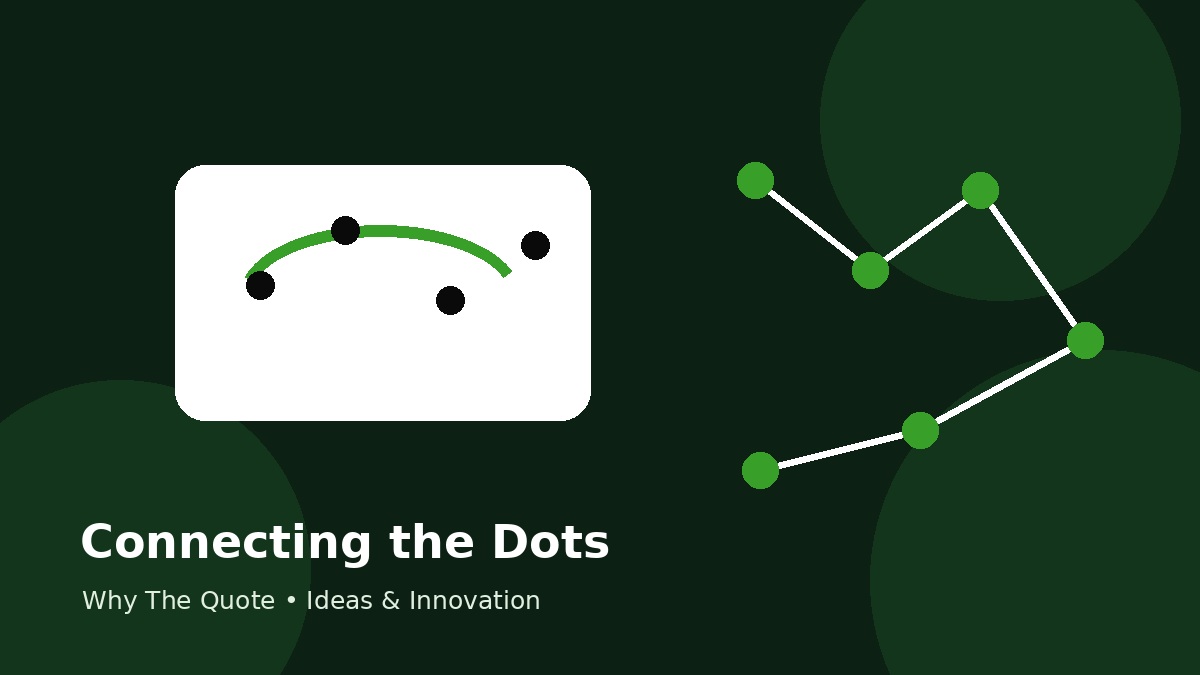
Some experiences feel important while they are happening. Others look random until years later.
That was the point Steve Jobs was making in his 2005 Stanford commencement address when he described dropping out of college and then dropping into a calligraphy class. At the time, there was no obvious career plan behind it. Years later, he connected that experience to the typography built into the Macintosh.
Hindsight creates a pattern
Looking backward gives us information that was unavailable when a decision was made. We know what happened next. We can see which skills became useful, which relationships mattered and which apparently minor choices changed direction.
That is why a life or career can look more coherent in retrospect than it felt in real time. The pattern is visible only after more of the dots exist.
That does not mean everything happens for a reason
Jobs’ message is sometimes reduced to the idea that every event will eventually prove useful. That is stronger than the story actually demonstrates. His example is better understood as an argument for curiosity and openness: something that does not fit today’s plan may still become valuable later.
This distinction matters. Hindsight can reveal genuine connections, but it can also tempt us to create neat explanations for messy events. The useful lesson is not that the future is predetermined. It is that learning can have value beyond its immediate purpose.
Why the quote lasts
The “connecting the dots” idea survives because it speaks to a common problem: we want decisions to make sense before we have enough information to know where they will lead. Jobs turned that uncertainty into a simple image.
The bigger story is about the relationship between curiosity and future usefulness. We cannot always connect the dots looking forward. We can, however, keep creating dots worth connecting.